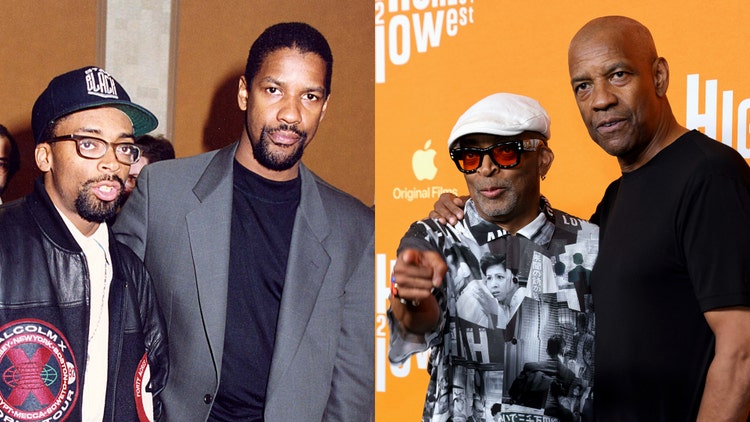
Few partnerships in American cinema carry as much weight as Spike Lee and Denzel Washington. Over three decades, the Brooklyn-born director and the Oscar-winning actor have fused their talents to tell stories that span music, politics, sports, and crime. Each project showcases Washington’s magnetic screen presence and Lee’s bold, socially conscious vision. From jazz clubs to Wall Street boardrooms, their collaborations have not only entertained audiences but also shaped conversations around race, identity, and justice.
Reflecting on their body of work during a Rotten Tomatoes interview, Washington casually ran through the titles. “It’s a blessing we done five, but I’ve never thought about [how] we’ll be here talking about a movie we did 30-some years later,” he stated before adding, “You just keep it moving.”
Their work together is selective but potent — just five films, each distinct in tone and subject matter. Revisiting these projects reveals not only the evolution of two legendary careers, but also how their collaborations mirror the changing cultural landscape.
1. Mo’ Better Blues
Spike Lee and Denzel Washington first joined forces in this ode to jazz and artistic ambition. Washington starred as Bleek Gilliam, a trumpet player torn between his devotion to music and the complications of his personal life. The film dove into the sacrifices artists make, touching on themes of loyalty, ego, and the blurred line between passion and self-destruction. Washington brought Bleek’s intensity to life, capturing the highs and lows of a musician’s journey with raw charisma. For Lee, it was a chance to explore the vibrant cultural world of jazz while critiquing the challenges of balancing art and responsibility.
2. Malcolm X
Perhaps the most iconic Spike-Denzel collaboration, Malcolm X cemented Washington’s place among the greatest actors of his generation. His portrayal of the civil rights leader earned him an Academy Award nomination and remains a career-defining performance. Lee’s ambitious three-hour epic traced Malcolm’s transformation from street hustler to global activist, blending intimate storytelling with sweeping historical scope. Washington’s ability to channel both fiery conviction and private vulnerability gave the film its soul. Together, Lee and Washington delivered a work that still resonates as both history lesson and cinematic triumph.
3. He Got Game
Years after Malcolm X, the duo reunited for a project that merged basketball culture with complex family drama. Washington played Jake Shuttlesworth, a father temporarily released from prison to convince his son, Jesus (NBA star Ray Allen), to sign with the governor’s alma mater. The film examined redemption, temptation, and the weight of expectation in the lives of young Black athletes. Washington conveyed Jake’s desperation and regret with layered depth, while Lee uses basketball as a lens to critique exploitation and the commodification of talent. With its mix of street realism and heightened emotion, He Got Game remains one of the most unique sports dramas ever made.
4. Inside Man
By the mid-2000s, both Lee and Washington were established icons, and their reunion took the form of a slick New York heist thriller. Washington starred as Detective Keith Frazier, tasked with negotiating during a meticulously planned bank robbery orchestrated by Clive Owen’s Dalton Russell. The film was pure entertainment, but Lee infused it with commentary on race, class, and post-9/11 tensions. Washington played Frazier with measured confidence, balancing humor, skepticism, and authority. Inside Man became Lee’s highest-grossing film, proving that his socially conscious style could thrive in the realm of mainstream Hollywood spectacle.
5. Highest 2 Lowest
Nearly two decades after their last outing, Spike and Denzel returned with Highest 2 Lowest, a modern reimagining of Akira Kurosawa’s High and Low. The thriller followed a wealthy businessman facing a crisis when his family became entangled in a kidnapping plot that exposed the stark divide between privilege and poverty. Washington anchored the narrative with his trademark gravitas, while Lee used the story to critique contemporary inequality and corporate power. Their reunion demonstrated how both men continue to push creative boundaries, remaining just as urgent and relevant in the present day as when they first collaborated.