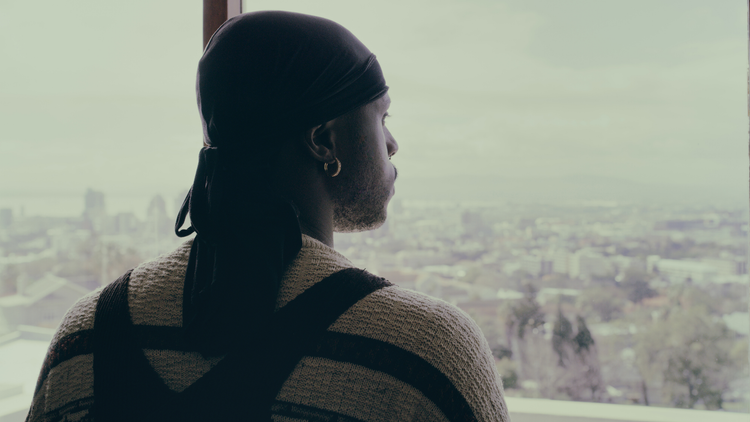
Tuskegee University’s new dress code has sparked yet another debate about bonnets, durags, slippers, and what “belongs” in a college classroom. On the surface, it’s a conversation about clothing. But underneath it is a much older question: How much of ourselves are Black people expected to monitor, edit, and contain before we’re considered worthy of respect?
Ahead of the academic year, Tuskegee President Dr. Mark A. Brown told students that revealing clothing, bedroom shoes, bonnets, and durags would not be permitted in classrooms or the cafeteria. The message also stated that faculty are "empowered to respond to students who are inappropriately dressed based on these guidelines." Brown framed the policy as helpful for students to develop a "solid foundation for the workforce," warning that employers may allow a student’s presentation to outweigh even "stellar preparation."
On one hand, the intention behind that message is understandable. Clothing communicates before we do. And ideally, college should help students enter professional spaces with confidence. HBCUs have a storied tradition of cultivating Black excellence in a world determined to undervalue and underestimate it, so there’s nothing inherently wrong with teaching young folks how to read a room, show up for an occasion, or make intentional choices about how they present themselves.
But there’s a meaningful difference between giving Black students tools for navigating anti-Blackness and allowing its expectations to determine the standards by which they are governed. Although every item grouped under the policy does not carry the same cultural significance, restrictions on bonnets and durags specifically raise particular questions about how Black hair, style, and presentation are policed.
Tuskegee students have said they already understand when business attire is appropriate. The university has its own “dress to impress” culture, including campus events that celebrate students showing up in suits and heels. One student told The New York Times that classmates wearing bonnets to class was never an issue in the first place, which raises an uncomfortable possibility: The policy is not correcting a widespread problem as much as it’s formalizing a suspicion that Black students can’t be trusted to know when and how to present themselves.
That suspicion carries the weight of the scrutiny we internalize. Many Black people learn early to rehearse ourselves before entering certain spaces. Is my hair “neat” enough? Does my name sound “too Black”? Should I lower or soften my voice, change my clothes, straighten my posture, or be less expressive? We know a lot of this as code-switching. We call some of it being “professional.” The lines between the two easily blur, and in our bodies, that can feel like constant surveillance even when cameras aren’t present.
And that vigilance has a cost. It shows up in the breath we hold before we speak, the tension in our shoulders as we enter a room, and the mental gymnastics we perform when calculating how much of ourselves is safe to reveal. Over time, society sends a clear message that policies like Tuskegee’s risk reinforcing the message that your competence and preparation may not be enough. And furthermore, that before you can be recognized as credible, you must first make yourself easily digestible and nonthreatening — suppressing parts of yourself for the comfort of those judging you.
Respectability politics tells us that if we dress correctly, speak carefully, and behave impeccably, perhaps we can avoid the prejudice of others. History has repeatedly exposed the limits of that promise. Black military veterans were attacked and lynched while wearing the uniforms of a country they served. Trayvon Martin’s hoodie became part of the public argument used to make a murdered teenager appear threatening. Black professionals, athletes, and students have been penalized for their natural hair and the coverings used to protect it. There has never been an outfit capable of protecting us from anti-Blackness or its consequences.
This is why the source of this new policy matters. Restrictions on Black cultural expression can feel especially painful when they come from an institution created to educate and nurture the success of Black lives. HBCUs have always wrestled with what Black advancement requires: mastering dominant norms, transforming them, or doing both at once. That tension deserves thoughtful conversation. Still, an HBCU should be one of the places where Black students are taught that adapting to power dynamics is a nuanced skill and not a measure of their humanity or worthiness.
The double standard is also hard to ignore. At predominantly white institutions, students routinely cross campuses in pajama pants, baseball caps, and slippers without their clothing being treated as evidence of whether they deserve opportunity or belonging. When similar casualness among Black students triggers public concern about “excellence,” ordinary clothing becomes loaded with the burden of representing an entire race.
It’s also telling that this debate often breaks along generational lines. Older Black adults may recognize strict presentation as a survival strategy that helped them enter rooms once closed to us. Younger people are not necessarily rejecting that history; they’re questioning why survival strategies of the past should remain permanent rules.
Students also questioned why their appearances received such urgent attention while they struggled with things like housing, financial aid, transportation, and access to professional opportunities. That critique gets to the heart of the issue. If the goal is readiness, institutions can invest in internships, mentoring, career coaching, community closets, and direct conversations about workplace expectations. They can teach students that biased standards exist while also equipping them to challenge those standards. Workforce readiness doesn’t require turning every classroom or cafeteria into a simulated corporate office.
Professionalism should be measured by whether students arrive prepared, engage seriously, meet deadlines, respect others, and take responsibility for their work. A bonnet cannot tell us whether someone completed the reading. A durag cannot reveal their discipline, intellect, or ambition. When appearance becomes shorthand for character, institutions risk teaching the very bias they claim to be helping students survive.
To be clear, the answer is not to pretend presentation never matters. It’s to be precise about when it matters, why it matters, and whose comfort our standards are designed to protect. Black students deserve practical guidance for navigating the world as it is, and they also deserve institutions brave enough to help build the world as it should be.
Tuskegee can prepare students for biased workplaces without reproducing those workplaces inside its walls. That means trusting students with context, offering resources instead of suspicion, and refusing to confuse conformity with excellence. Young Black people already carry the exhausting awareness that they may be watched more closely and judged more harshly. Their education should expand their possibilities, not reproduce the scrutiny they already face beyond campus.