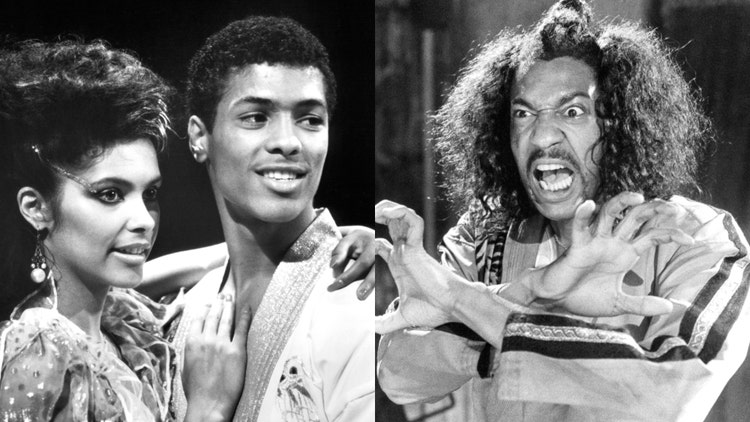
The Last Dragon exploded onto screens with a blend few had ever seen: kung fu action, Motown pop, and campy comedy set in the streets of New York. Produced by Motown founder Berry Gordy, directed by Michael Schultz (Cooley High), and written by dancer-turned-screenwriter Louis Venosta, the film seemed improbable from the start. Yet it became a cult classic that delivered something Black and Asian audiences weren’t often given at the time — a charismatic hero of color. Nearly four decades later, the story behind its creation is as wild and fascinating as the movie itself.
From Bruce Lee fandom to Berry Gordy’s vision
As explained by the JoBlo Movie Network, the seed for The Last Dragon was planted at a 10th anniversary screening of Bruce Lee’s Enter the Dragon in New York. Louis Venosta recalled an audience packed with fans shouting lines, mock-fighting in the aisles, and treating the screening like The Rocky Horror Picture Show. Inspired by the energy, he dreamed up a script about a Black martial arts devotee nicknamed “Bruce Leroy,” complete with a rival called the “Shogun of Harlem.”
Motown Productions purchased Venosta’s script, and Gordy set out to make a movie that fused martial arts mania with the sound and style of his label. It would be part homage to kung fu cinema, part showcase for Motown’s latest acts, and — if Gordy had his way — a crossover blockbuster.
Casting the hero and the shogun
At the heart of the film was the quest to find Leroy Green, a shy martial artist in pursuit of “The Glow.” Contenders for the role included Billy Blanks and Mario Van Peebles, but the part ultimately went to a 19-year-old martial arts champion named Taimak. His road wasn’t smooth: At his first audition, he showed up expecting a karate demonstration and bombed his line reading. A trip to Miami with his father and best friend turned into weeks of practice on the script. By the time he returned, he nailed the role, even displacing another actor Motown had considered.
Equally important was the villain. Julius J. Carry III, a classically trained actor with no martial arts experience, auditioned for Sho’nuff. Tall and collegiate-looking, he transformed once he slipped into the outlandish costume and wig. The character’s name came from the then-popular novel “Shogun,” reimagined as the “Shogun of Harlem.” With Carry’s booming delivery of lines like “Kiss my Converse!,” The late actor’s Sho’nuff became one of the most memorable villains of his time.
Music, Motown, and MTV energy
Because The Last Dragon was a Motown film, the soundtrack became as crucial as the fight scenes. Gordy enlisted stars like Stevie Wonder, Smokey Robinson, and DeBarge, whose “Rhythm of the Night” played prominently on screen and climbed the Billboard Hot 100. Vanity, formerly linked with Prince, was cast as video show host Laura Charles, giving the movie both romantic spark and musical authenticity.
The fictional “7th Heaven” show within the film mirrored the aesthetics of MTV, then at the height of its cultural dominance. Pop videos were woven into the plot, creating an early synergy between cinema and music television. The result was a film that doubled as both martial arts fantasy and Motown showcase.
Filming, release, and early reception
Shot largely in New York, the film leaned into the city’s grindhouse culture. A movie theater scene featuring rowdy fans watching Enter the Dragon mirrored the real Times Square screenings that inspired Venosta. Schultz kept the tone light; JoBlo explained how the project was described as a martial arts fairy tale rather than a gritty urban drama.
With a budget of about $10 million, The Last Dragon opened in March 1985. It earned $33 million at the box office despite stiff competition from Police Academy 2. Reviews were lukewarm — Roger Ebert wrote that it was “so entertaining that I could almost recommend it” — but the film found its audience through HBO reruns, VHS rentals, and word of mouth. For many Black viewers, seeing a heroic protagonist of color in a martial arts setting was groundbreaking.
The glow that never faded
Though sequels never materialized, The Last Dragon lived on through its fans. Rappers like Busta Rhymes channeled Sho’nuff in music videos, while sitcoms from “Black-ish” to “Insecure” referenced it. Even Disney’s Raya and the Last Dragon seemed to nod to the cult classic with a line about “the Glow.”
Home video releases cemented its legacy. A 2015 Blu-ray featured a behind-the-scenes look at the making of Sho’nuff, and, in 2023, Sony issued a 4K UHD restoration with commentary by comedian Amber Ruffin and author Lacey Lamar. Remake rumors swirled for years, with names like RZA and Samuel L. Jackson attached, but nothing materialized. Venosta has since regained rights, sparking talk of a possible continuation.
For Taimak, who still teaches martial arts and appears at fan conventions, the film’s endurance has been both a blessing and a responsibility. He often describes The Last Dragon as a story about believing in the “special person” within. That message, coupled with its campy charm, explains why audiences continue to pass it down to new generations.
The Last Dragon is far from flawless (uneven effects, broad comedy, and camp excess define it), but that’s part of its charm. It bridged cultures, celebrated Motown, and gave audiences a Black hero who fought not just for supremacy, but for self-discovery. Eons later, its “glow” still burns, reminding fans that sometimes the quirkiest films leave the deepest mark.