Key Takeaways:
- Ol’ Dirty Bastard’s accidental studio visit led to one of the most iconic verses of the late ’90s.
- Mýa’s breakout moment came after ODB insisted her vocals stay on the track.
- The song’s genre-blending sound helped it transcend charts and borders, earning Grammy recognition.
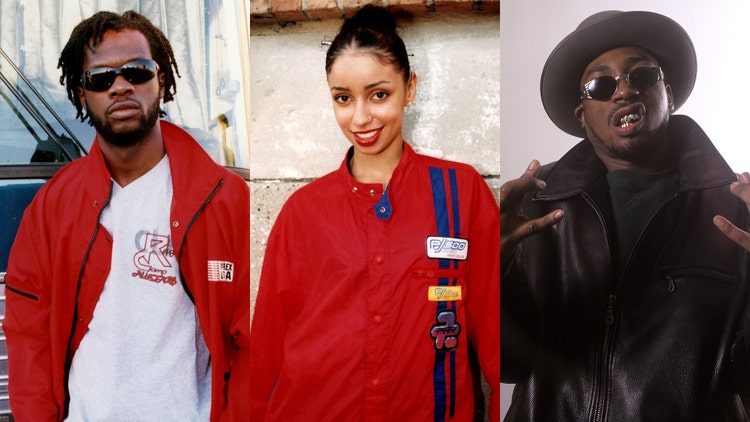
In an industry known for meticulous planning and airtight collaborations, the creation of “Ghetto Supastar (That Is What You Are)” was an unrepeatable, chaotic miracle. Picture this: Ol’ Dirty Bastard stumbles into the wrong studio thinking he’s in New York, not Los Angeles. He hears a loop playing, falls in love with it, demands to record on the spot, and lays down what would become one of the most iconic verses of the late ‘90s. That moment, combined with a Kenny Rogers and Dolly Parton interpolation, a rising star named Mýa, and the backdrop of a political satire film, launched Pras Michel’s solo career and gave the world a timeless anthem.
Pras Michel’s solo career after The Fugees
Fresh off the monumental success of The Score and Wyclef Jean's The Carnival, Pras was at a creative crossroads. He wasn’t the breakout voice of the Fugees, nor was he a dominating producer like his bandmates. But he had vision — and an ear for crossover hits. Determined to build a legacy of his own, he assembled a track with co-producers Wyclef, Jerry “Wonda” Duplessis, and Che Pope. The initial concept centered around interpolating the Bee Gees-penned classic “Islands in the Stream,” originally performed by Kenny Rogers and Dolly Parton. Layered with a James Brown sample and Love Unlimited groove, the beat was both nostalgic and fresh.
Wyclef Jean would later throw shade in the press, labeling Pras an “eight-bar superstar” — a reference to the perception that his success hinged on brief yet impactful features rather than full-length solo strength. The remark ignited tension between the two Refugee Camp alums and framed much of the narrative around Pras’ solo ambitions in the years to follow.
How Mýa secured her spot on “Ghetto Supastar”
At the time, Mýa was a newcomer with only one single to her name. Interscope Records wasn’t convinced she could carry the hook for a major record. Behind the scenes, more established singers were auditioned for the chorus. But everything changed when ODB, in his unfiltered genius, heard Mýa’s take and asked, “Who’s that?” According to Mýa herself, it was his endorsement that solidified her placement on the track. Recorded quickly in a New York studio under the watchful eyes of Clef and Pras, her buttery vocals proved to be the glue that held the record together — making the unlikely trio click in perfect harmony.
Ol’ Dirty Bastard’s accidental role in the hit
Pras was in a California studio working on what he hoped would be his solo breakout when Ol’ Dirty Bastard walked in — confused, uninvited, and utterly serendipitous. As Pras recalled in a VladTV interview, ODB thought he was in New York, mistaking Enterprise Studios in L.A. for Unique Studios in Manhattan.
With the beat looping in the background, ODB tuned in, vibed out, and demanded to record. Initially, Pras considered deleting the verse. But when playback came through, he knew they had something special. Recorded in essentially one take, The Wu-Tang member’s unorthodox lines about political corruption, paranoia, and street life elevated the song beyond a club banger and into something surreal and politically charged.
Inside the “Ghetto Supastar” beat, sample choices and Bulworth-backed visual
Set in C-sharp major with a tempo around 100 BPM, “Ghetto Supastar” is both groovy and melancholic. Its interpolation of “Islands in the Stream” carried nostalgic pop warmth, while samples of James Brown’s “Get Up, Get Into It, Get Involved” and Love Unlimited’s “Under the Influence of Love” gave it streetwise soul.
All were legally cleared and credited in the liner notes, which further showcased the cross-genre ambition of the record. Notably, years later, the Bee Gees themselves interpolated the “Ghetto Supastar” chorus into their own reworking of “Islands in the Stream” for their compilation, Their Greatest Hits: The Record.
The song’s inclusion in the political satire Bulworth, starring Warren Beatty and Halle Berry, added another layer of irony. Directed by future Hunger Games helmer Francis Lawrence, the video blended scenes from the film with dystopian visuals of gas-masked dancers, decaying cityscapes, and a fictional Black president played by Pras.
The reported $1 million budget paid off — the visuals became an MTV staple and earned nods at the 1998 VMAs for Best Rap Video and Best Video from a Film. During that same broadcast, Pras joined Wyclef for a medley performance that closed with “Ghetto Supastar” — a moment that cemented the track’s status as both a commercial and cultural event.
Chart success, Grammy nod, and the lasting impact of “Ghetto Supastar”
“Ghetto Supastar” debuted at No. 99 on the Billboard Hot 100 in June 1998 and peaked at No. 15, where it remained for five weeks. Internationally, it reached the top spot in countries like Germany, Ireland, New Zealand, Switzerland, Austria, Denmark, Norway, Sweden, and the Netherlands; it also climbed to No. 2 in the U.K. It was later nominated for Best Rap Performance by a Duo or Group at the 41st Grammy Awards.
Though Pras never replicated the success of “Ghetto Supastar,” the song’s legacy is firmly intact. It’s been covered by artists across genres, interpolated by Weird Al Yankovic, and even hailed by Taylor Swift as her “seventh-grade anthem” during a tour stop.
At its core, “Ghetto Supastar” was a song about transcending boundaries — social, political, musical. It proved that a country ballad, a rap misfit, a rising R&B singer, and a Fugee underdog could create something greater than the sum of their parts.