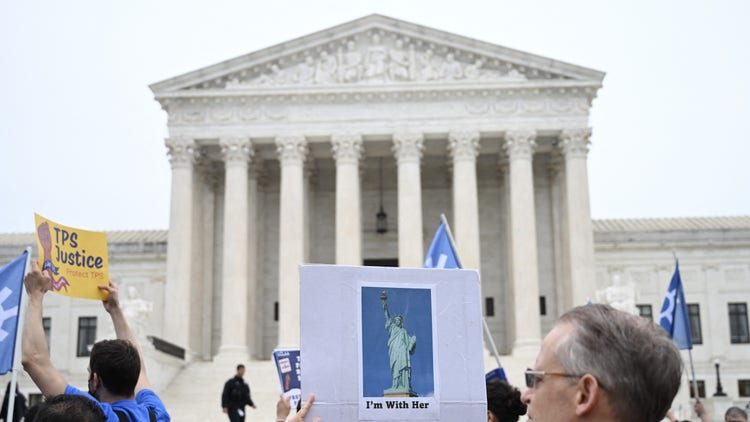
Key Takeaways
- In Louisiana v. Callais, the Supreme Court ruled 6-3 that the state’s congressional map was an unconstitutional racial gerrymander under current interpretations of the Voting Rights Act.
- The decision will require Louisiana lawmakers to revisit the state’s congressional district boundaries ahead of upcoming elections.
- Rev. Al Sharpton, Letitia James, and other political leaders publicly criticized the ruling and raised concerns about its implications for minority representation.
On Wednesday (April 29), the Supreme Court issued a decision that could further narrow the Voting Rights Act. In a 6-3 decision, justices ruled that Louisiana’s congressional map was a racial gerrymander, despite the fact that it was drawn to follow the landmark law protecting minority votes.
The Louisiana v. Callais ruling was widely expected to deal a major blow against the federal rule that helps protect minority voting representation in some states. Writing for the majority, conservative Justice Samuel Alito’s opinion left little doubt that the court did exactly that.
“Section 2 of the Voting Rights Act… was designed to enforce the Constitution — not collide with it,” he wrote, per The Washington Post. “Unfortunately, lower courts have sometimes applied this Court’s [Section] 2 precedents in a way that forces States to engage in the very race-based discrimination that the Constitution forbids.”
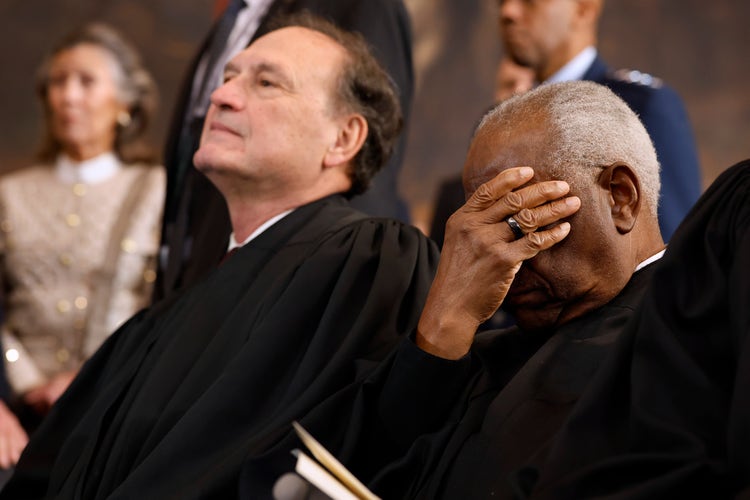
What the Supreme Court’s Louisiana v. Callais ruling could mean for Black and Latino voters
Following the Voting Rights Act ruling, Louisiana may now have to redraw its map. The state had already redrawn it in 2024 to create two majority-Black districts. Making matters even more complicated, the Pelican State’s primary is scheduled for May 16, which is only about two weeks away.
As for what that could mean for Black and Latino voters, there’s also the fear that other states may try to follow Louisiana’s lead. The New York Times reported that Alabama, Georgia, South Carolina, Missouri, Tennessee, and Florida are among the other Republican-controlled states that could make similar moves ahead of the midterms.
Political figures respond to the Supreme Court’s Voting Rights Act decision
Taking to social media, many political figures were outraged — though not completely shocked — over the Supreme Court’s decision. Rev. Al Sharpton described it as “a bullet in the heart of the voting rights movement.”
“Today’s Supreme Court decision effectively guts a key pillar of the Voting Rights Act, freeing state legislatures to gerrymander legislative districts to systematically dilute and weaken the voting power of racial minorities,” Barack Obama wrote on the platform X, formerly known as Twitter.
New York Attorney General Letitia James also wrote on X, “The Voting Rights Act was born on the Edmund Pettus Bridge. This decision dishonors that legacy.” Meanwhile, Ohio Rep. Shontel Brown penned, “The Supreme Court’s ruling in Louisiana v. Callais erodes voting rights and shamefully turns back the clock.” See more reactions below.