Key Takeaways
- SoundExchange honored MC Lyte for her years of advocacy dedicated to improving royalty fairness for recording artists.
- She actively supports and promotes the American Music Fairness Act, seeking to ensure that AM/FM radio stations pay performance royalties.
- MC Lyte’s recognition highlights ongoing efforts within Hip Hop to secure rights and financial equity for artists working in today’s music landscape.
MC Lyte is being recognized for using her voice beyond the booth to advocate for artists and their financial rights.
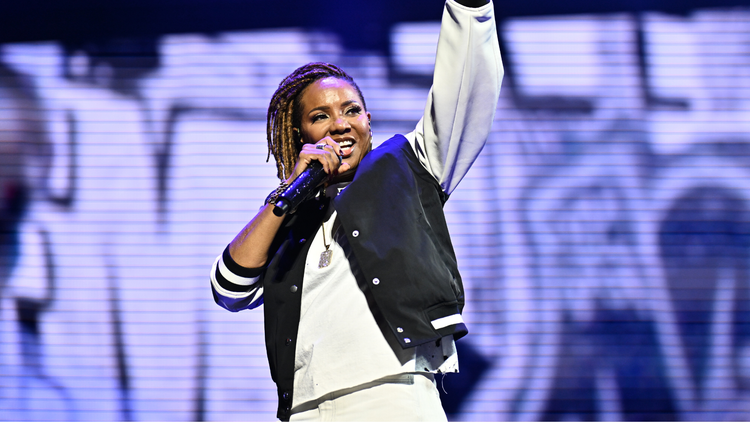
On Wednesday (Aug. 19), SoundExchange presented the Hip Hop pioneer with its Music Fairness Award, honoring her work in support of creators and the American Music Fairness Act. The proposed legislation would establish a performance royalty for artists and copyright holders when their sound recordings are played on terrestrial AM/FM radio.
“I am deeply grateful to SoundExchange for this recognition and for its unwavering commitment to standing up for artists,” Lyte said, per Music Business Worldwide. “Advocacy has always been part of my purpose, and I believe that creators deserve to be respected, protected, and fairly compensated for the music and culture they bring to the world.”
She added, “I’m proud to stand with SoundExchange in the fight for music fairness and for a future where every artist’s work is valued.”
Lyte’s involvement in the campaign has taken her directly to Capitol Hill. In 2024, she joined fellow Hip Hop legends Darryl “DMC” McDaniels and Melle Mel in meeting with lawmakers about the legislation. She returned to Washington this summer to continue pushing members of Congress to support its passage.
SoundExchange President and CEO Michael Huppe praised Lyte for “breaking barriers, elevating artists, and using her voice to drive meaningful change,” adding that the organization was honoring her continued leadership on behalf of creators.
What would the American Music Fairness Act change?
Under current federal copyright law, nonsubscription terrestrial radio stations generally do not have to obtain a license for the public performance of copyrighted sound recordings, while certain digital audio services are subject to performance royalty requirements.
The American Music Fairness Act would change that by requiring terrestrial broadcasters to obtain licenses for those recordings. Royalty rates would be determined by the Copyright Royalty Board, with certain smaller stations eligible for reduced flat-fee structures.
The House version, H.R. 861, was introduced by Rep. Darrell Issa in January 2025 and referred to the House Judiciary Committee. As of Congress.gov’s latest listed action, the measure remains at the introduced stage.
Lyte is among nearly 600,000 SoundExchange members who use the organization to collect neighboring-rights royalties around the world. Her broader advocacy work stretches back decades, including her participation in Hip Hop’s Stop the Violence Movement and the 1989 all-star single “Self Destruction.”