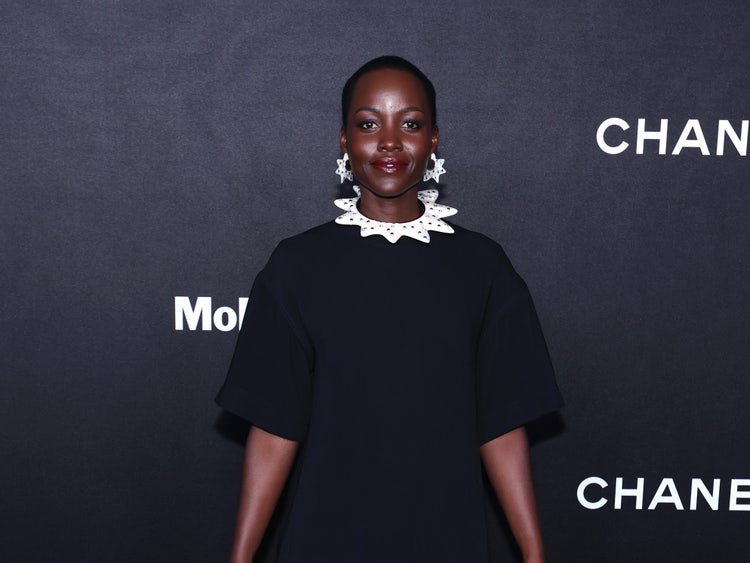
Key Takeaways
- Lupita Nyong’o faced repeated offers to play enslaved characters after her Oscar Award win for 12 Years a Slave and chose to walk away from them.
- She prioritized roles that expanded the portrayal of African characters beyond historical trauma.
- Her decisions highlight the limited imagination that Hollywood often applies to Black women’s stories.
Lupita Nyong’o is looking back at the immediate aftermath of her breakout performance in 12 Years a Slave — and the reality wasn’t the Hollywood launch many expected. The actress sat down with Beninese French singer-songwriter and actress Angélique Kidjo on CNN, where she opened up about the roles that came her way after winning an Oscar Award for Best Supporting Actress in 2014.
Nyong’o explained that instead of a wave of varied lead opportunities, she was pushed toward the same kinds of characters she had already portrayed. “My winning an Academy Award came at the very start of my career,” she said. “It was for the very first film that I had done. So, it really did set the paces for everything I’ve done since. But, you know, what’s interesting is that after I won that Academy Award, you’d think, ‘Oh, I’m going to get lead roles here and there.’ [Instead, it’s], ‘Oh, Lupita, we’d like you to play another movie where you’re a slave, but this time, you’re on a slave ship.’ Those are the kinds of offers [I was getting] in the months after winning my Academy Award.”
She remembered the period as emotionally delicate. “It was a very tender time,” she continued. “There is an expectation for you and your career. There were think pieces about, ‘Oh is this the beginning or end of this … African woman’s career?’ I had to deafen myself to all those pontificators, because at the end of the day, I am not a theory. I am an actual person. I like to be a joyful warrior for changing the paradigms of what it means to be African.”
Nyong’o said she was willing to turn down work in order to avoid feeding Hollywood’s limited view of African characters. “If that means I work one job less a year to ensure that I’m not perpetuating the stereotypes that are expected of people from my continent, then let me do that,” she told Kidjo.
The 42-year-old star’s next steps reflected that intention. After 12 Years a Slave, she moved into blockbuster territory with her motion-capture role in Star Wars: Episode VII - The Force Awakens, followed by Black Panther. She went on to lead Us and recently appeared in A Quiet Place: Day One and The Wild Robot. Up next is Lunik Heist, which is still in development, and The Odyssey in 2026.
Lupita Nyong’o on losing her Kenyan accent and finding her voice
Nyong’o has also spoken honestly about the painful identity shifts that came with breaking into Hollywood. On a 2024 episode of the “What Now? with Trevor Noah” podcast, she revealed that she felt pressured to drop her Kenyan accent early in her career. “The first permission I gave myself to change my accent or allow my accent to transform was going to drama school,” she said. The famed actress then added that working on an American accent outside the classroom “felt like betrayal,” explaining, “I didn’t feel like myself and I cried many nights to sleep… Many, many nights.”
Born in Mexico to Kenyan parents, Nyong’o has built a career on refusing limiting narratives — and her latest reflections show she’s still shaping Hollywood on her own terms.