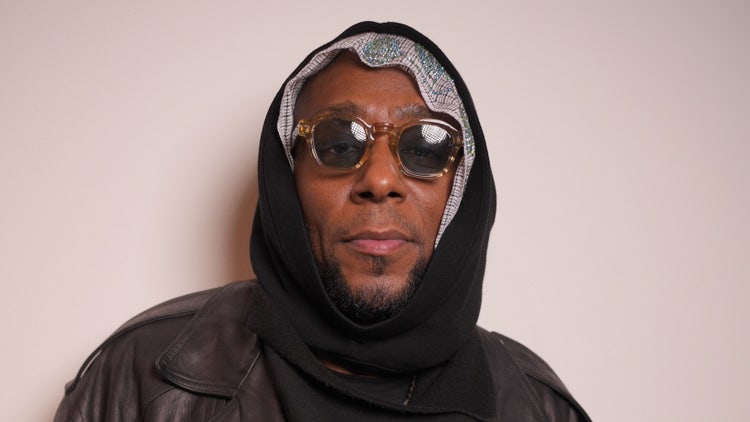
Few artists in Hip Hop have traveled as boldly, or as unpredictably, as Yasiin Bey. Born Dante Terrell Smith in Brooklyn, he first rose to prominence under the name Mos Def, a sharp lyricist whose cadence and conscience made him one of the defining voices of late-’90s rap. From his early days with Urban Thermo Dynamics alongside family, to his groundbreaking partnership with Talib Kweli as Black Star, Bey’s work has always carried a sense of urgency. He’s an artist who remains deeply in conversation with his community and the world around him.
Across nine solo and collaborative projects, Bey pushed boundaries while refusing to be boxed in. He’s just as comfortable weaving social critique into soulful rhyme schemes as he is experimenting with rock, poetry, or global sounds. That restless creativity has earned him critical acclaim, Grammy nominations, and a lasting influence on everyone from Kendrick Lamar to Kid Cudi.
Now, with scores of work behind him and a legacy that continues to grow, it’s the perfect time to revisit Yasiin Bey’s incredible discography. His journey proves why he remains one of music’s most inventive and uncompromising voices.
1. Mos Def & Talib Kweli Are Black Star
Before their solo careers took off, Yasiin Bey and Talib Kweli united for a timeless statement in Hip Hop. With tracks like “Definition” and “Respiration,” the duo celebrated Black culture while critiquing violence and materialism. The result was an underground classic that helped define conscious rap for a new era.
2. Black On Both Sides
Yasiin Bey’s solo debut cemented him as one of Hip Hop’s sharpest voices. The album blended live instrumentation and social commentary with classics like “Ms. Fat Booty,” “Mathematics,” and the soulful anthem “Umi Says.” It quickly earned gold status, solidifying Mos Def as more than just Talib Kweli’s partner in rhyme.
3. Manifest Destiny (Urban Thermo Dynamics)
Before Black Star, Yasiin Bey recorded with brother DCQ and friend Ces as Urban Thermo Dynamics. Their lone album, Manifest Destiny, was cut in the mid-’90s but shelved until a decade later. Tracks like “Victory” and “My Kung-Fu” revealed Bey’s raw early talent and a family-driven glimpse of his artistic roots.
4. The New Danger
Bey’s ambitious sophomore album pushed past Hip Hop into rock and soul, backed by his band, Black Jack Johnson. Featuring production from Kanye West, 88-Keys, and Easy Mo Bee, he delivered raw experiments like “Ghetto Rock” and “Zimzallabim” alongside the Grammy-nominated single “Sex, Love & Money.” A bold, divisive step in his catalog.
5. TRUE MAGIC
Released with no cover art or booklet, True Magic felt more like a contractual obligation than a carefully crafted project. Still, it offered gems like “Dollar Day” and another Grammy-nominated single, “Undeniable.” Critics were mixed, but the album captured flashes of Bey’s brilliance amid an otherwise uneven presentation.
6. The Ecstatic
A dazzling return to form, The Ecstatic fused global sounds — Latin rhythms, Middle Eastern samples, Afrobeat — with Bey’s sharp, politically charged lyricism. Critics hailed it as his liveliest, most adventurous work since Black on Both Sides, with highlights like “Auditorium,” “Casa Bey,” and “Life in Marvelous Times.” It earned Grammy nominations and cult-classic status.
7. December 99th
Bey linked with artist Ferrari Sheppard for December 99th, an experimental TIDAL exclusive. The project was a mix of hazy jazz, soul, and alternative rap elements. Released just before Bey’s announced retirement, the project baffled critics, and it later vanished from streaming, leaving it as a polarizing, elusive chapter in his catalog.
8. Negus
Unveiled at Art Basel Hong Kong years after it was recorded, Negus existed only as a traveling sound installation and was never released digitally or physically. Produced by Lord Tusk, Steven Julien, and ACyde, the eight-track project forced listeners to lock away phones and focus solely on the music — turning the album into living art.
9. No Fear Of Time (with Black Star)
After more than two decades, Black Star reunited for No Fear of Time, entirely produced by Madlib and initially released via Luminary. Recorded in unconventional spaces like hotel rooms and backstage at Dave Chappelle shows, the project reignited Bey and Talib Kweli’s chemistry, with critics praising its urgency and mature reflections.