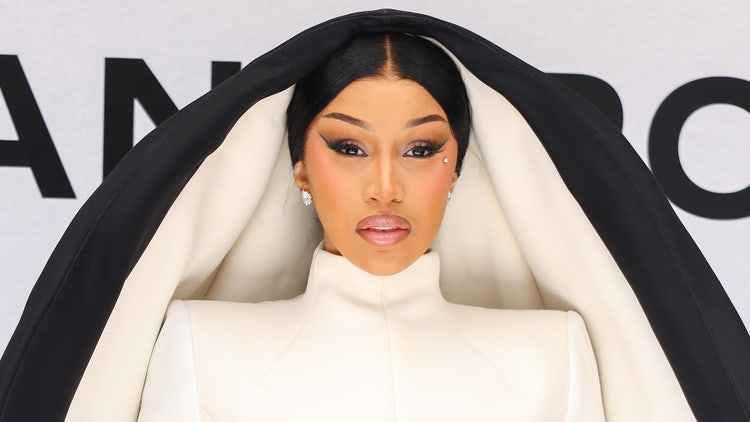
There’s no blueprint for Cardi B. Born Belcalis Marlenis Almánzar in the Bronx, she first grabbed attention with her candid humor on Instagram and her stint on “Love & Hip Hop: New York.” But it was music that turned her into a global force. Cardi’s rise from self-released mixtapes to Grammy-winning superstardom is one of the most improbable and definitive success stories in modern Hip Hop.
Prologue: Cardi B’s early mixtapes and “Love & Hip Hop” beginnings
Cardi’s musical ambitions began before most took her seriously. Early on, she landed on Shaggy and Popcaan’s “Boom Boom (Remix),” spitting playful but commanding bars. Months later, she shot her first independent video, “Cheap A** Weave,” in a hair salon with a no-budget and a raw display of the flow she’d later polish.
Then came her debut mixtape, Gangsta B**ch Music Vol. 1. The project, anchored by the single “Foreva,” showcased her blunt lyrics and aggressive delivery. A sequel, Vol. 2, arrived the following year, featuring “Lick” with Offset (a sign of things to come). By then, Cardi quit “Love & Hip Hop” to focus solely on rap, a gamble that would soon pay off.
Act I: “Bodak Yellow” breakthrough and Grammy-winning Invasion of Privacy
Cardi’s career flipped overnight with the release of “Bodak Yellow (Money Moves).” The J. White Did It-produced single — which pulled inspiration from a certain Kodak Black hit — debuted on the Hot 100 at No. 85 before storming to No. 1, making her the first solo female rapper since Lauryn Hill to top the chart. It stayed there for three weeks, the longest run for a woman rapper at the time.
Momentum carried into the 2017 BET Hip-Hop Awards, where she won Best New Hip-Hop Artist, Single of the Year, and Hustler of the Year. That November, she earned two Grammy nominations for “Bodak Yellow” under her playful songwriter alias, Washpoppin.
Things kicked up a notch with her debut studio album, Invasion of Privacy. Packed with features from SZA, Chance the Rapper, Migos, and J Balvin, it debuted at No. 1 on the Billboard 200 and spawned hits like “Be Careful,” “Bartier Cardi,” and the chart-topping “I Like It.” Cardi made history again, becoming the first artist since The Beatles and Ashanti to score their first three Hot 100 hits in the Top 10 simultaneously. She also became the first woman with five songs in the Top 10 of the Hot R&B/Hip Hop Songs chart at once.
That same year, her remix of Bruno Mars’ “Finesse” reached No. 3 on the Hot 100, with Mars praising her as “a true star.” By that fall, she tied Drake for most AMA nominations (eight) and took home three trophies. Entertainment Weekly named her “Entertainer of the Year.”
Cardi continued to break barriers by winning a Grammy for Best Rap Album — the first solo woman rapper to do so. Invasion of Privacy subsequently won Album of the Year at the BET Awards, where she also snagged Best Female Hip Hop Artist. A headlining arena tour followed, proving her pulling power went beyond singles. She then made her film debut in Hustlers alongside Jennifer Lopez and served as a judge on Netflix’s “Rhythm + Flow.”
Act II: Cardi B’s No. 1 hits, viral collaborations, and cultural dominance
If the first act was about proving herself, the second was about ruling the charts and sparking conversation every step of the way. Cardi continued her reign with tracks like “WAP” with Megan Thee Stallion, which (you guessed it) debuted at No. 1, set streaming records, and ignited cultural debates. At the BET Awards, it won Video of the Year, beating her own “Up.”
Speaking of: “Up” gave Cardi her fifth No. 1 and cemented her as the only female rapper to reach that milestone.
She kept her profile high through features: Migos’ “Type S**t,” Normani’s sultry “Wild Side,” Lizzo’s comeback single “Rumors” (peaking at No. 4), and GloRilla’s viral smash “Tomorrow 2.”
Keeping things rolling, Cardi dropped “Hot S**t” with Kanye West and Lil Durk, which bowed at No. 13. Later that year, she surprised audiences at the American Music Awards by popping up during GloRilla’s set.
While she remained visible with a steady stream of guest features and singles (many of which were omitted for space), Cardi’s sophomore album became a frequent question mark. She teased snippets on Instagram, promised fans she was “not rushing” the process, and admitted the pressure to follow Invasion of Privacy was intense. In interviews, she joked about scrapping tracks she no longer liked and said she wanted her next project to feel “timeless.”
Nonetheless, she kept pushing, and her influence extended far beyond just music. Whether dazzling on the Met Gala red carpet, voicing political opinions on social media, or landing on magazine covers, Cardi was a magnet for attention. But fans were hungry.
Fast-forward to “Like What (Freestyle),” a return to form that sampled Missy Elliott and was accompanied by a fiery clip (directed by Offset). Weeks later, she returned with “Enough (Miami),” a solo single that climbed into the Hot 100 Top 10 and earned Grammy consideration.
Anticipation for her long-awaited second LP only continued to grow. To (finally) kick off that campaign, Cardi dropped “Outside,” her first new solo track in a year, which debuted at No. 10. She quickly followed with “Imaginary Playerz,” sampling JAY-Z and pairing it with a sleek high-fashion video. All of it set the stage for her AM I THE DRAMA?, a sprawling 23-track project crafted over six years. Its title, a playful wink to her internet-famous persona, also serves as a statement on her artistry and influence.
Epilogue: Cardi B’s legacy as a record-breaking rap superstar
From salon-shot videos to Grammy stages, Cardi B’s trajectory has been a blend of grit, controversy, and undeniable talent. She’s racked up historic chart feats, shattered records, and reshaped the perception of what a female rapper can achieve in mainstream music.
Her story is proof that being loud, brash, and unapologetically yourself can be more than entertainment. For Cardi, it became the foundation of an empire. From mixtapes to megastar, she didn’t just rise. She redefined the climb.