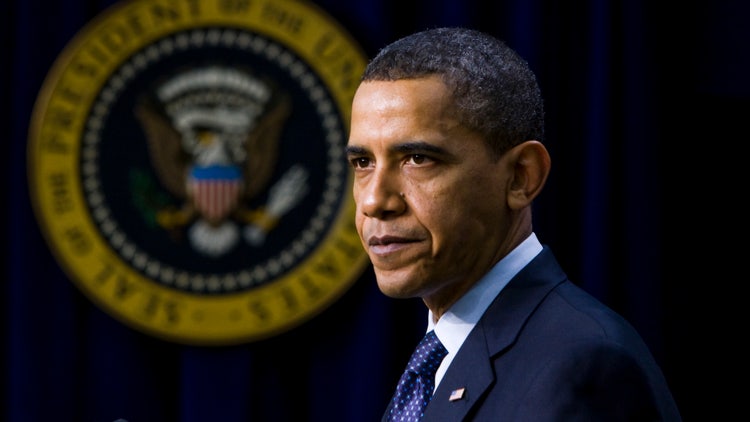
The ending is famous: The night in November 2008 when America elected its first Black president. But the road there is full of “wait, that happened?” moments. It’s a story that started long before campaign logos and debate stages, back when Barack Obama was doing unglamorous, ground-level work and stacking wins that didn’t look like presidential prep until later (or did it?).
It’s also a journey where the details matter. Some milestones were lightning bolts (a convention speech that turned into instant national buzz). Others were behind-the-scenes proof points (a digital operation that turned supporters into organizers at scale). And a few are the kind of political trivia that still sounds unreal out loud, like a presidential race where one state literally split its electoral votes by congressional district.
Here are 15 fun, wow-level facts that track the full climb, from early Chicago organizing to the night the map turned blue in places people didn’t expect.
1. His “first political job” wasn’t politics at all
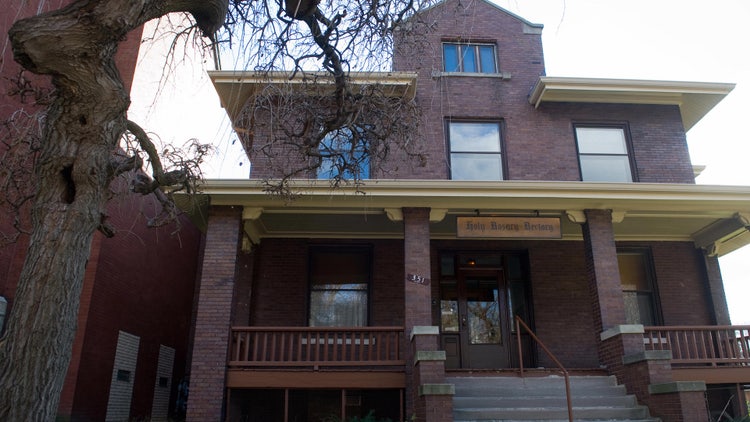
Before he was a candidate, he was a community organizer. In 1985, Obama moved to Chicago to work with the Developing Communities Project, focusing on neighborhood issues like jobs and housing, including work connected to the Altgeld Gardens area on the South Side. That early chapter is easy to skip, but it’s the foundation, much in part thanks to listening tours, coalition-building, and the kind of local trust that can’t be faked later.
2. He became the first Black president of the Harvard Law Review
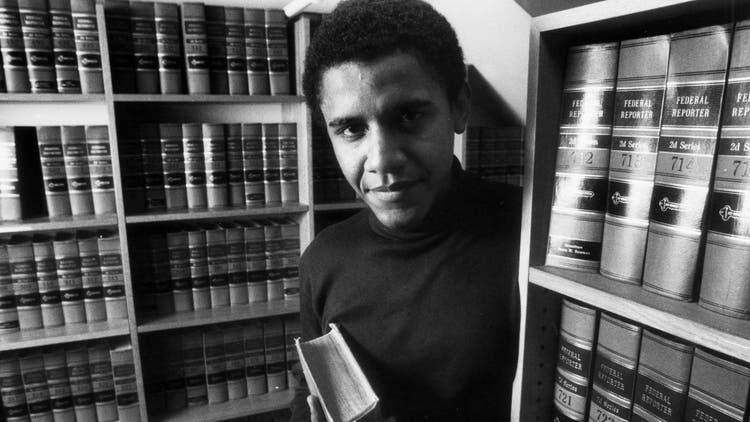
At Harvard Law Review, Obama’s election as president in 1990 made national news at the time, partly because it was unprecedented and partly because the position is a pipeline that powerful legal and political circles pay attention to. It was destiny in hindsight, but in the moment, it was a real institutional “first,” achieved inside one of the country’s most elite academic spaces.
3. He taught constitutional law while building his public life
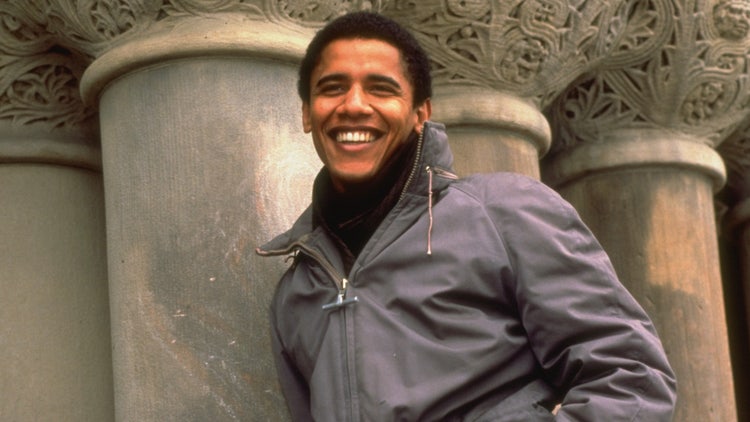
For more than a decade, Obama taught constitutional law at University of Chicago Law School. That’s a long stretch, and it overlaps with him entering elected office and rising nationally. The fun part is imagining the timeline: For years, students were learning the structure of American government from someone who would soon run it. (Yes, “Professor Obama” was a real thing.)
4. His climb through elected office started in Springfield’s orbit
Obama served in the Illinois State Senate starting in 1997 and stayed there through 2004. It’s not the flashiest line in the story, but it matters because it’s where he learned the grind of coalition votes, committee work, and local issues, long before the country knew his name. When he later launched his presidential run in Springfield, it also doubled as a subtle callback to his Illinois political roots.
5. His Senate race made U.S. history for a reason people forget
In the 2004 Illinois U.S. Senate election, Obama faced Alan Keyes after a candidate swap, creating what’s widely cited as the first U.S. Senate race where both major-party nominees were Black. That’s a niche piece of history, but it’s part of the bigger story: His rise continuously collides with notable firsts.
6. The convention line that became a national signature
At the Democratic National Convention, Obama delivered the keynote address that catapulted him into national consciousness. One reason it hit is how clean the messaging was. He gave the crowd a line that still gets quoted because it’s simple and built for TV replay: “There is not a liberal America and a conservative America; there is the United States of America.”
7. His presidential campaign launch was basically a location choice with meaning
Obama announced his candidacy in Springfield at the Old State Capitol. The fun fact isn’t just the date. It’s that the launch site is the kind of intentional political symbolism campaigns love: Illinois history, Lincoln associations, and a clear message that the run was rooted in something older than a news cycle.
8. Secret Service protection came unusually early
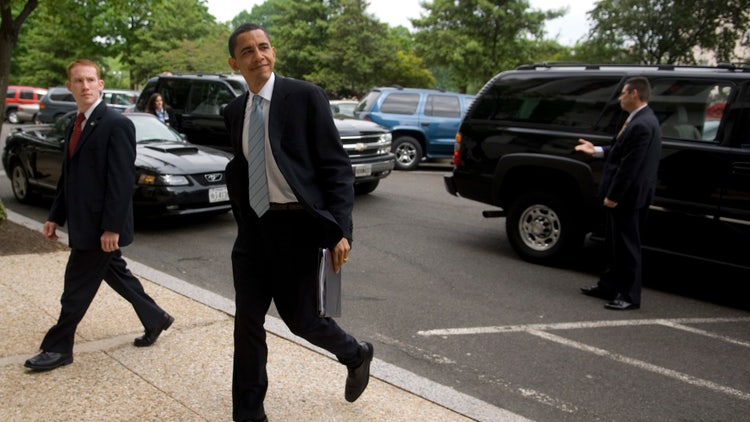
The United States Secret Service began protecting Obama in early May 2007, and major outlets noted it as the earliest-ever protection at the time for a presidential candidate that far ahead of Election Day. Why it matters as a “journey” marker: Protection is a hard, real-world sign that a candidate has moved into a different tier of public prominence and risk, long before the first votes are cast.
9. The campaign’s digital machine produced wild numbers
The Obama campaign didn’t just “use the internet.” It built a digital operation that functioned like an organizing engine. One breakdown of the campaign’s social media toolkit reports a peak of 8.5 million monthly visitors to MyBarackObama.com, 2 million profiles, 35,000 volunteer groups that held 200,000 offline events, and 70,000 fundraising hubs that raised $30 million. That’s not vibes — that’s infrastructure.
10. Iowa’s “win” wasn’t reported as a normal vote total
Here’s the quirky part: The Iowa Democratic Party reported caucus results in state delegate equivalents, not raw votes. In 2008, outlets reported Obama finishing first in Iowa’s delegate-equivalent count (with numbers like 940 for Obama, 744 for Edwards, 737 for Clinton). If you’ve ever wondered why caucus math can look confusing, this is the reason.
11. The campaign’s most studied speech had a specific trigger
Obama delivered “A More Perfect Union” at the National Constitution Center, and it became one of the defining speeches of the 2008 race. The key context: It was a direct response to the national controversy around Jeremiah Wright and broader questions about race and identity in the campaign. Even if you don’t rewatch old speeches, this one is still a big “this is what that moment felt like” document.
12. The day he became the first Black major-party presidential nominee
When Obama clinched enough delegates to secure the nomination, he became the first Black presidential nominee of a major U.S. political party on June 3, 2008. There are plenty of important primary nights, but this one is a clean, calendar-markable milestone that belongs in any “full journey” timeline because it changed what was possible at the highest level of national politics.
13. The VP pick dropped by text message
The campaign announced Joe Biden as the VP pick via SMS, and the actual message was blunt and fast: “Barack has chosen Senator Joe Biden to be our VP nominee…” (and yes, it told people where to watch the first rally). Nielsen estimated 2.9 million U.S. mobile subscribers received the text that weekend. That’s a very 2008 version of a “modern rollout.”
14. His fundraising number still looks unreal on paper
According to the Federal Election Commission, Obama’s 2008 campaign reported $745.7 million in receipts. The same FEC summary notes he was the first major-party nominee to decline public funding for the general election under the Presidential Election Campaign Fund system. Translation: the campaign bet on privately raised money at historic scale — and it worked.
15. The Electoral College map had a couple of “wait, really?” twists
Everyone remembers the overall win, but the fine print is fun:
- The National Archives and Records Administration listed Obama winning 365 electoral votes to John McCain’s 173.
- The official FEC election report showed Obama carried Indiana by 28,391 votes (1,374,039 to 1,345,648).
- That same FEC report noted he also won one of Nebraska’s five electoral votes, because Nebraska splits electoral votes by district.
- And in Grant Park, crowd estimates hit nearly a quarter-million for the victory rally and speech.